Launching an AI biotech
Gather's patient-tracking app builds a database of virtual patients that speeds drug development for hard-to-treat diseases like lupus.
I designed their logo and visual identity, codified that work as a design system in Claude, and produced a master investor pitch deck and responsive website. In two weeks.
Two audiences, one brand
I began with research to discover from Gather’s founders what positions them uniquely in this emerging field, and how they hope to launch and grow their business.
Two audiences, one fragile brand. Patients — 80–90% women of childbearing age, predominantly women of color, often financially strained — need warmth, transparency and reassurance, while pharma and investors need the opposite. The company breaks if the patient brand fails and survives a weak pharma brand, so the identities were split rather than compromised.
The name is the business model. Healthcare is scattered across hospitals, patients and pharma that don't talk to each other, and Gather's thesis is uniting them with patients as co-owners of their data. Patients had already shortened "GatherChart" to "Gather" on their own, so Gather became the master brand with Bio, Chart and Match beneath it.
A position triangulated, not chosen. Calibrated against Unlearn AI (too traditional), Noetik (the target — high-tech but grounded in evidence) and the founder's previous company Valinor (too far toward high-tech), landing at 70/30 scientific to high-tech: startup speed with pharma rigor.
Logo sketching and evolution
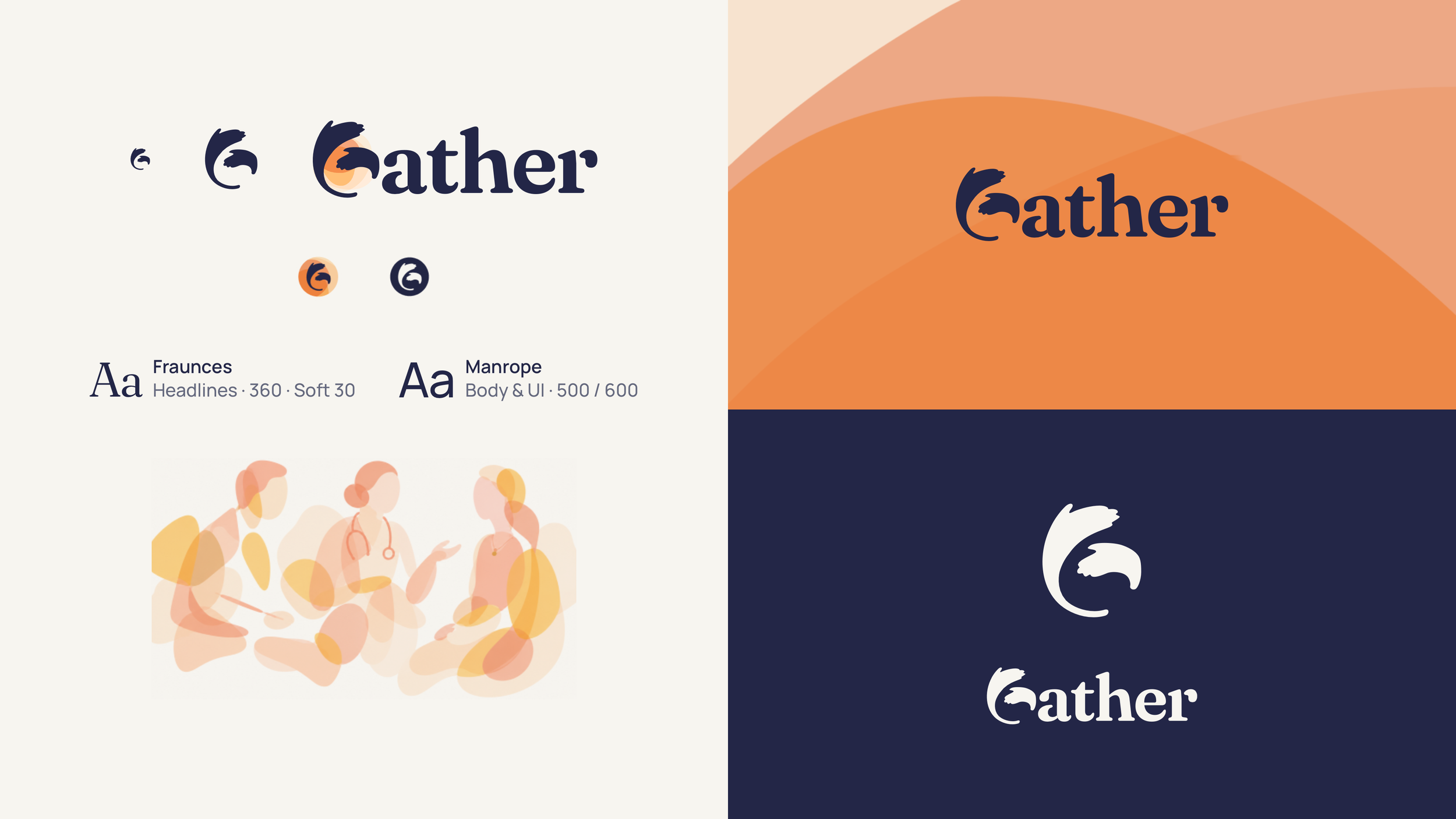
Consumer
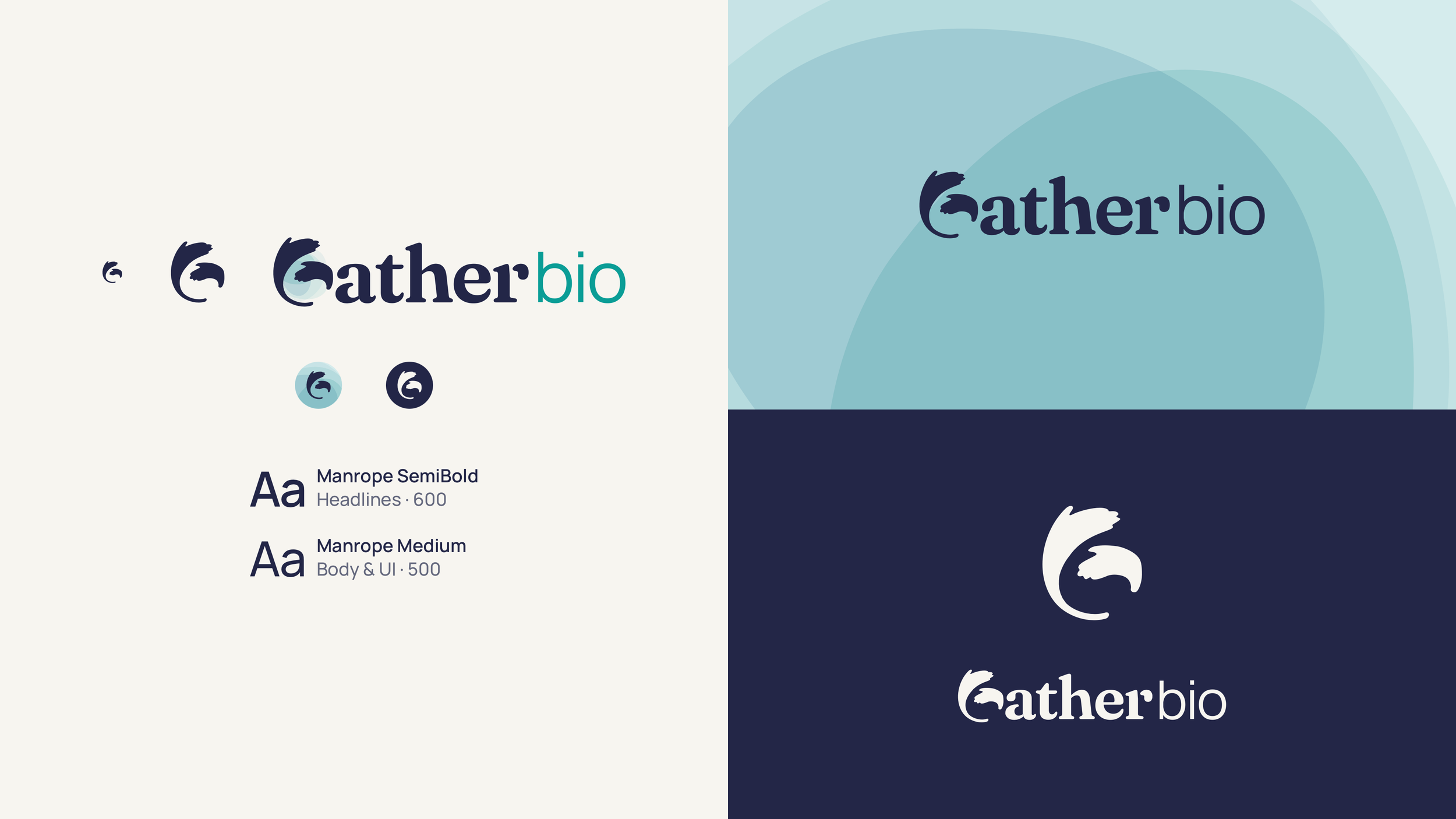
Pharma
Much is written about the power of AI in design, and I was eager to explore.

How are we making drugs now?
We’re missing a crucial piece: patient data.
 Step 01
Design the molecule

Test the drug in a virtual patient first
 $300M+
 $130M+
 $50M+
$50M+Capital raised behind the three leading virtual-patient companies.
 Step 02
Prove it in humans
How are we making drugs now?
We’re missing a crucial piece: patient data.
Investor deck slide animation made with Claude Design (first image); the same slide recut for Demo Day (second)
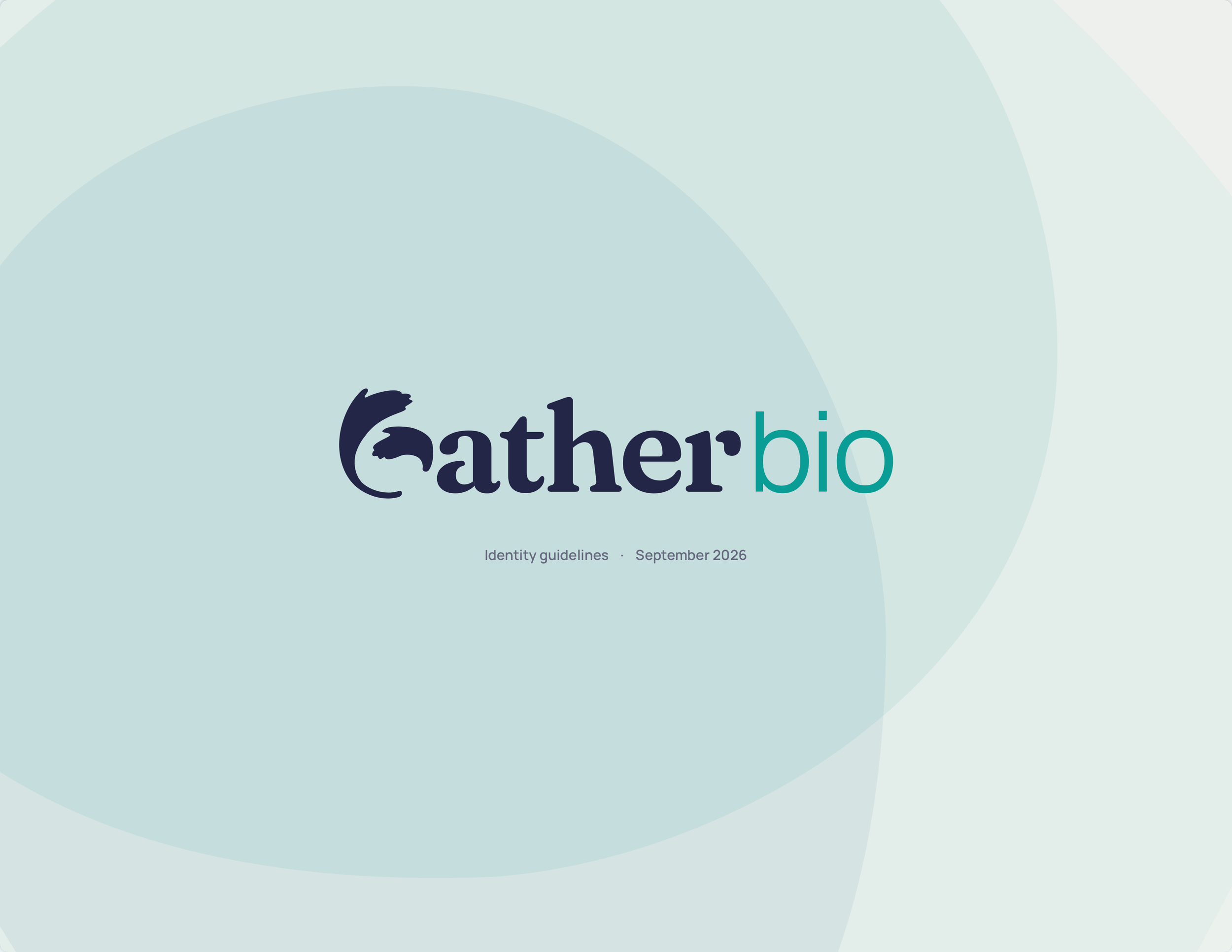
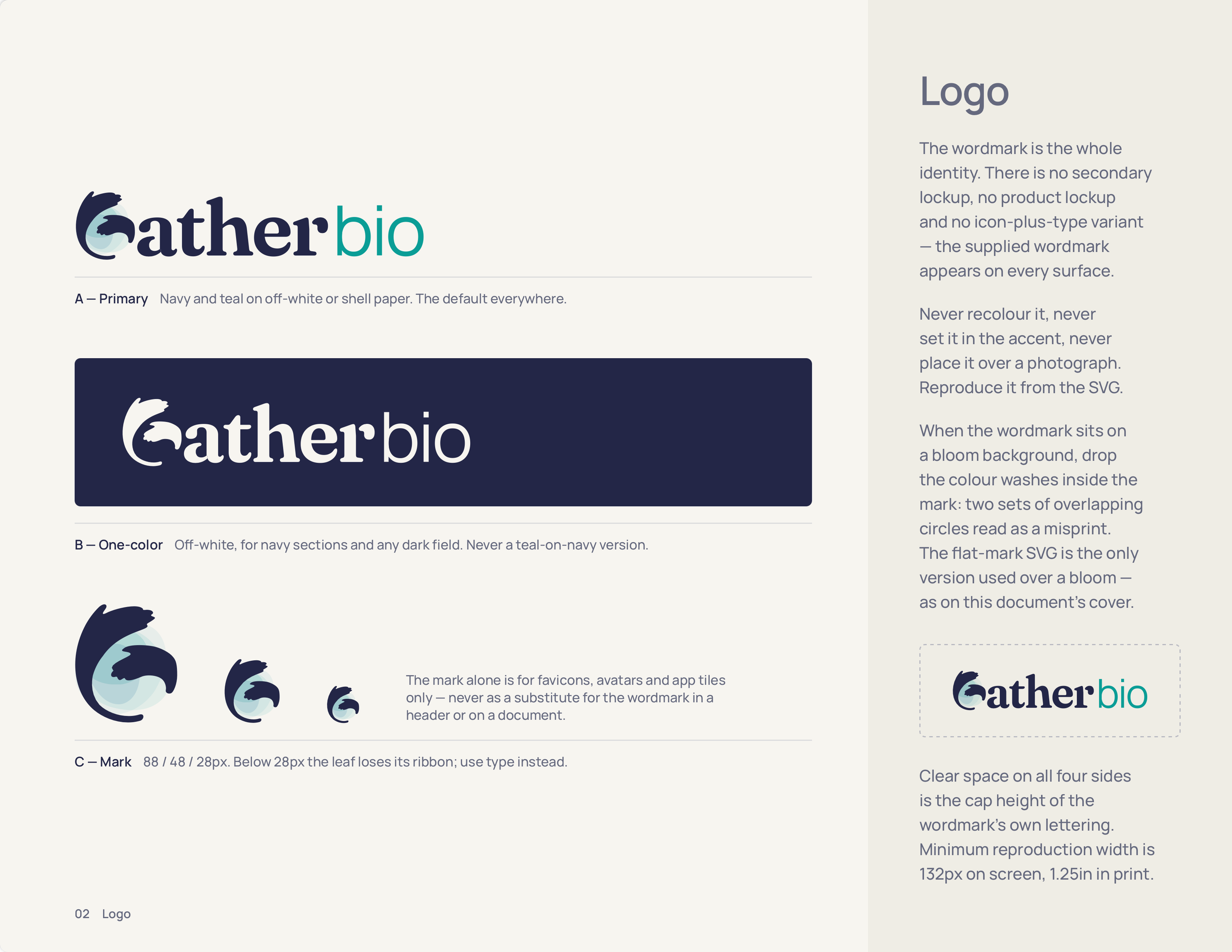
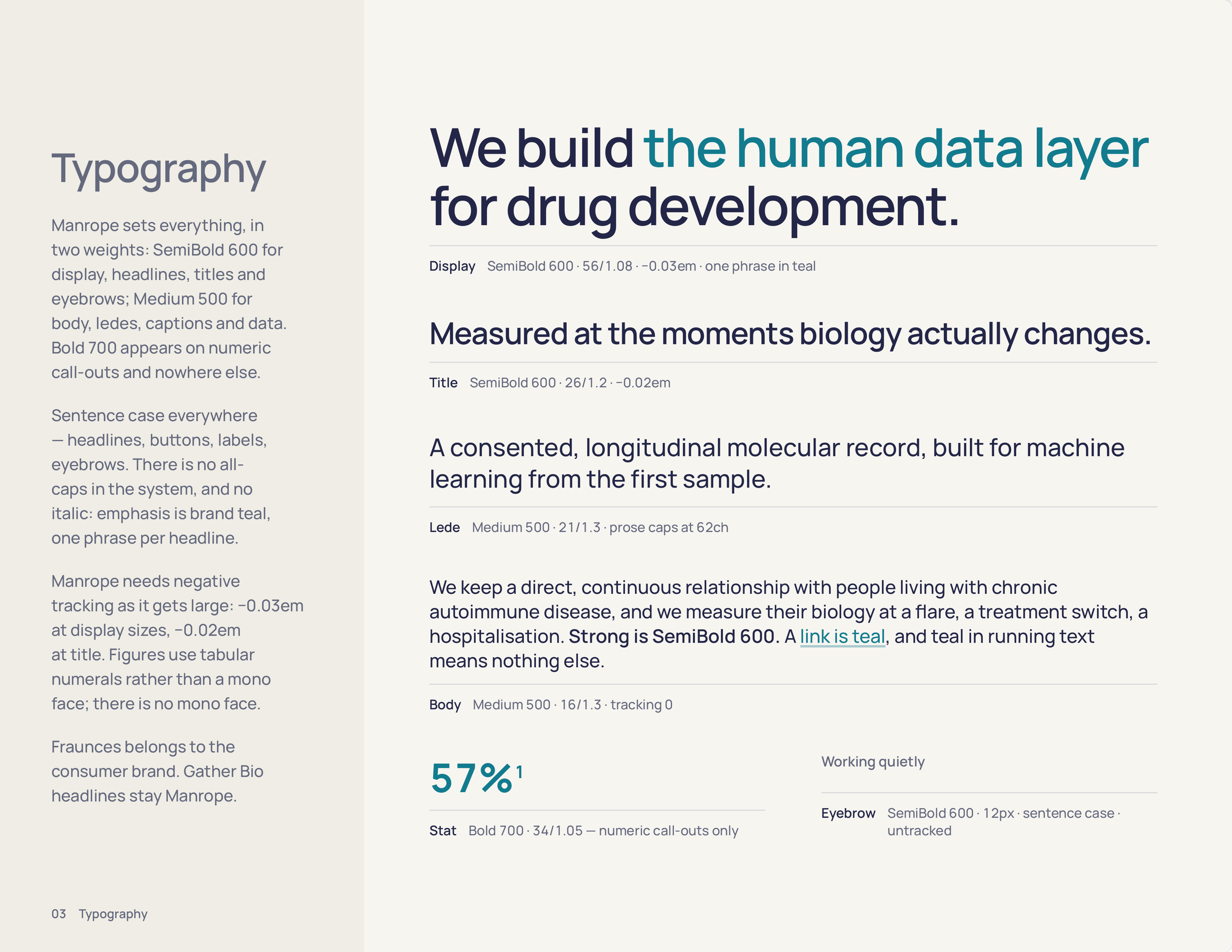
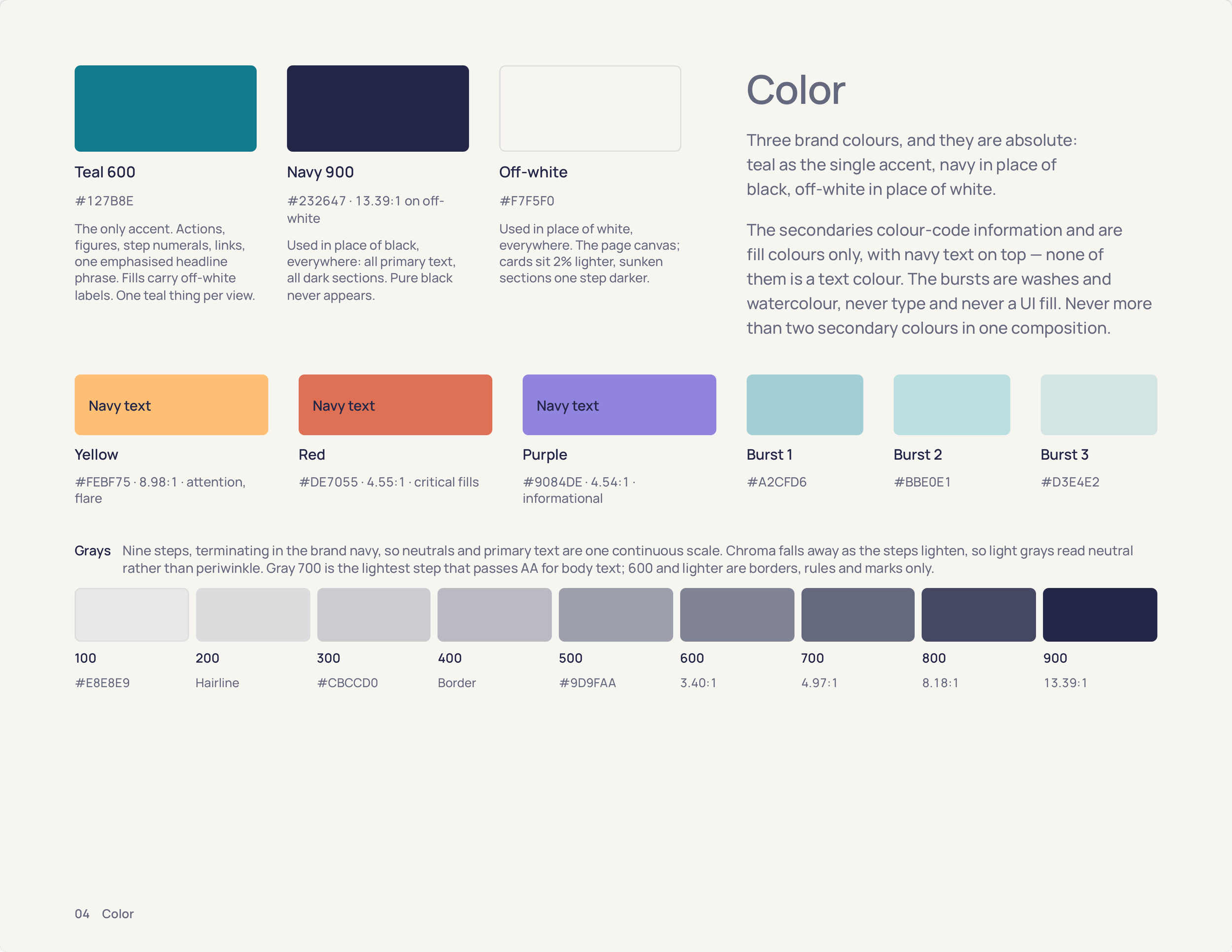
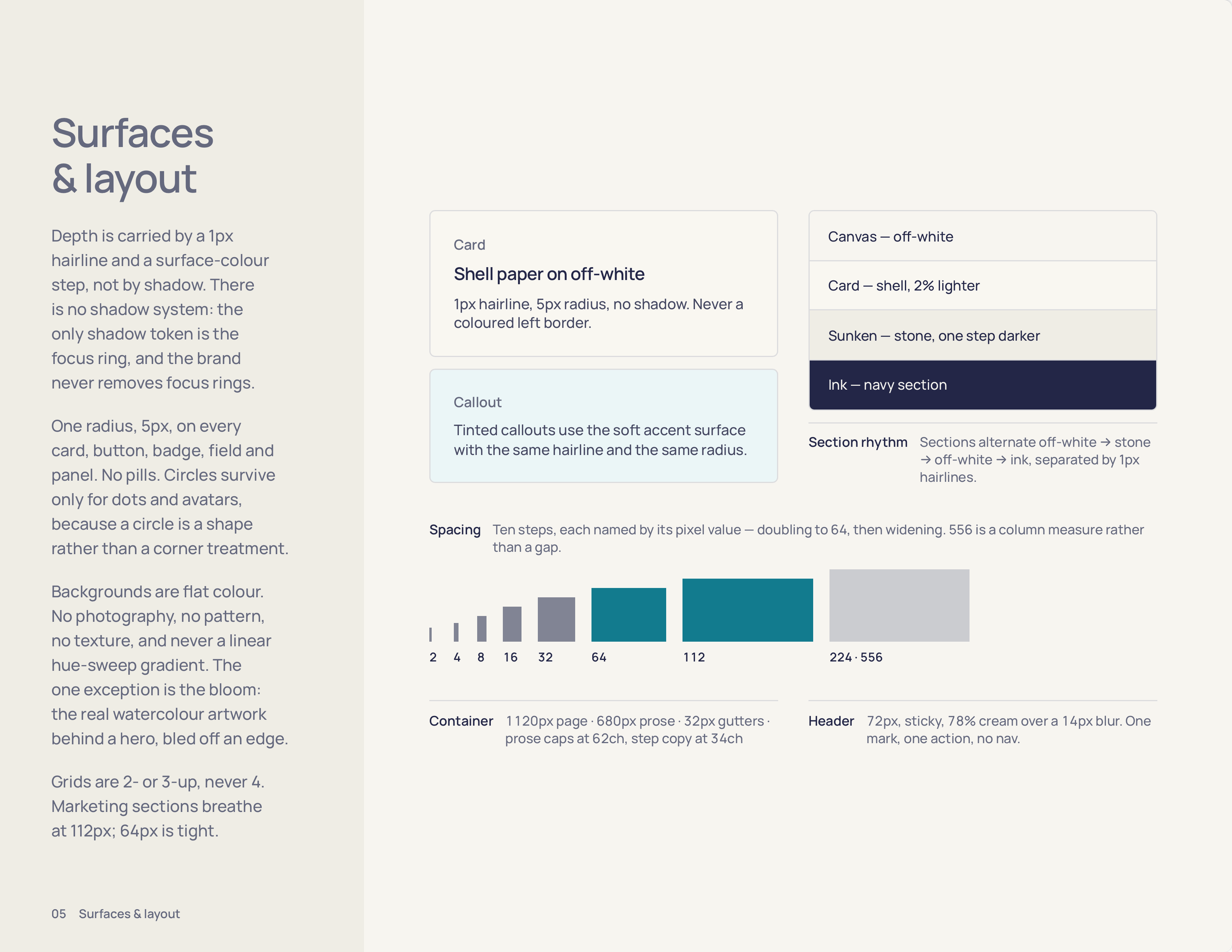
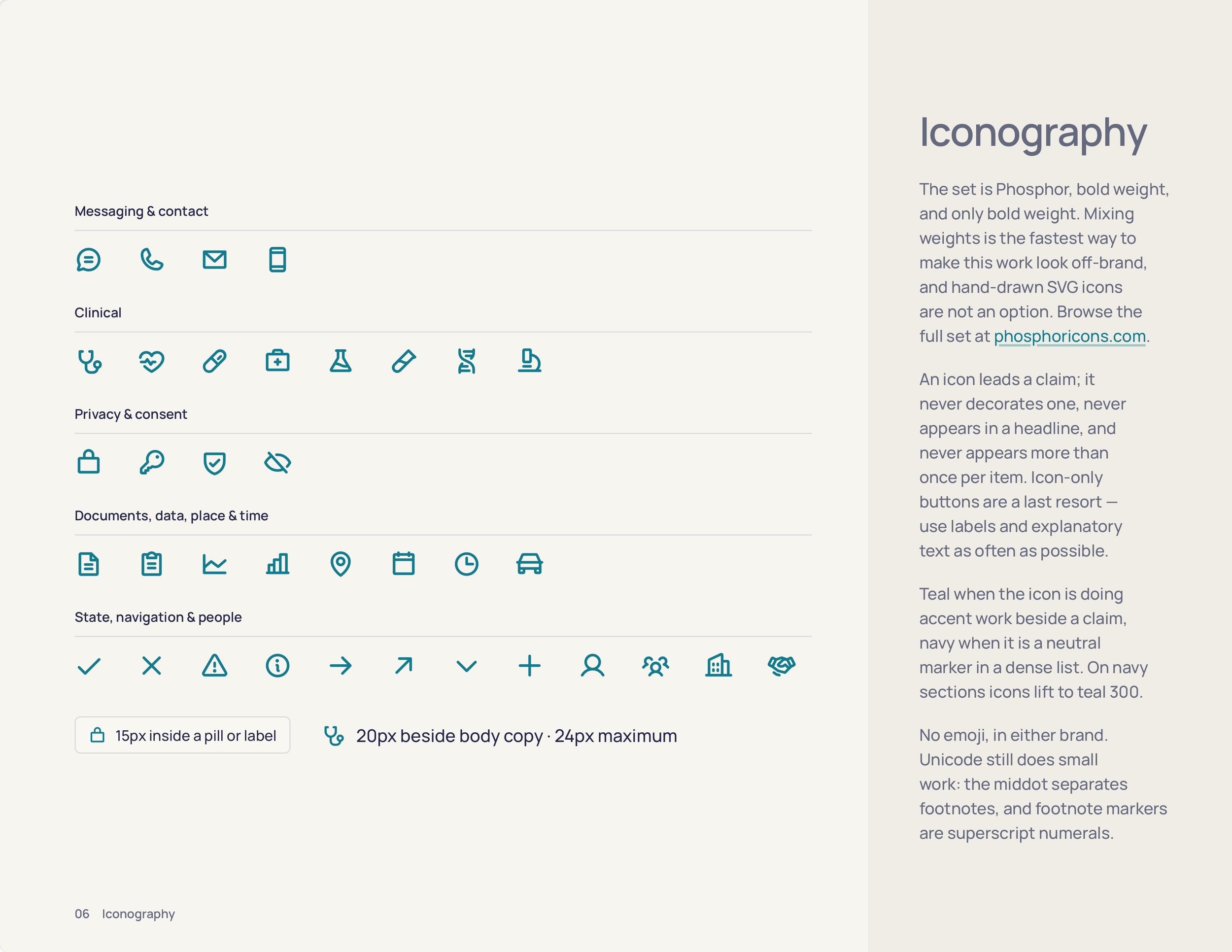
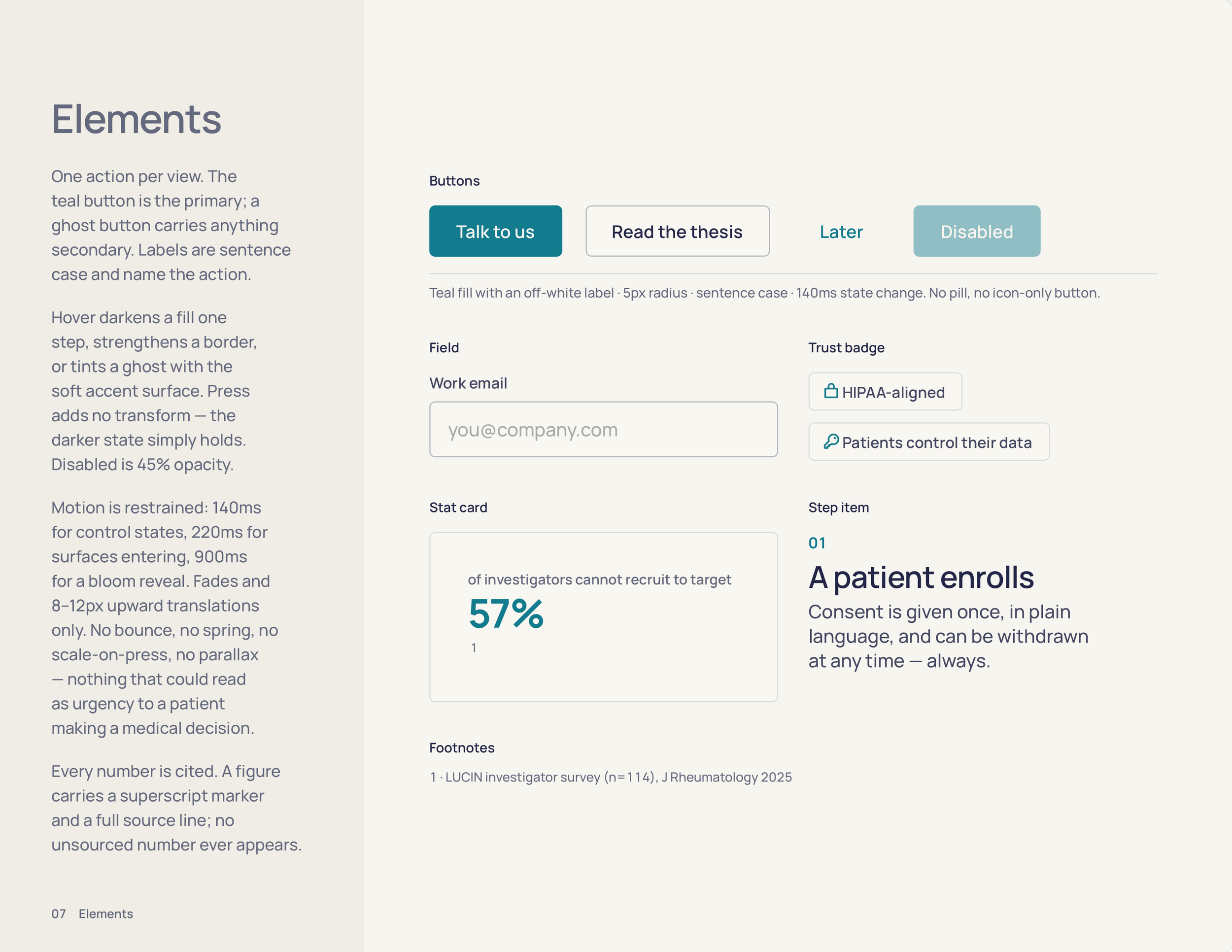
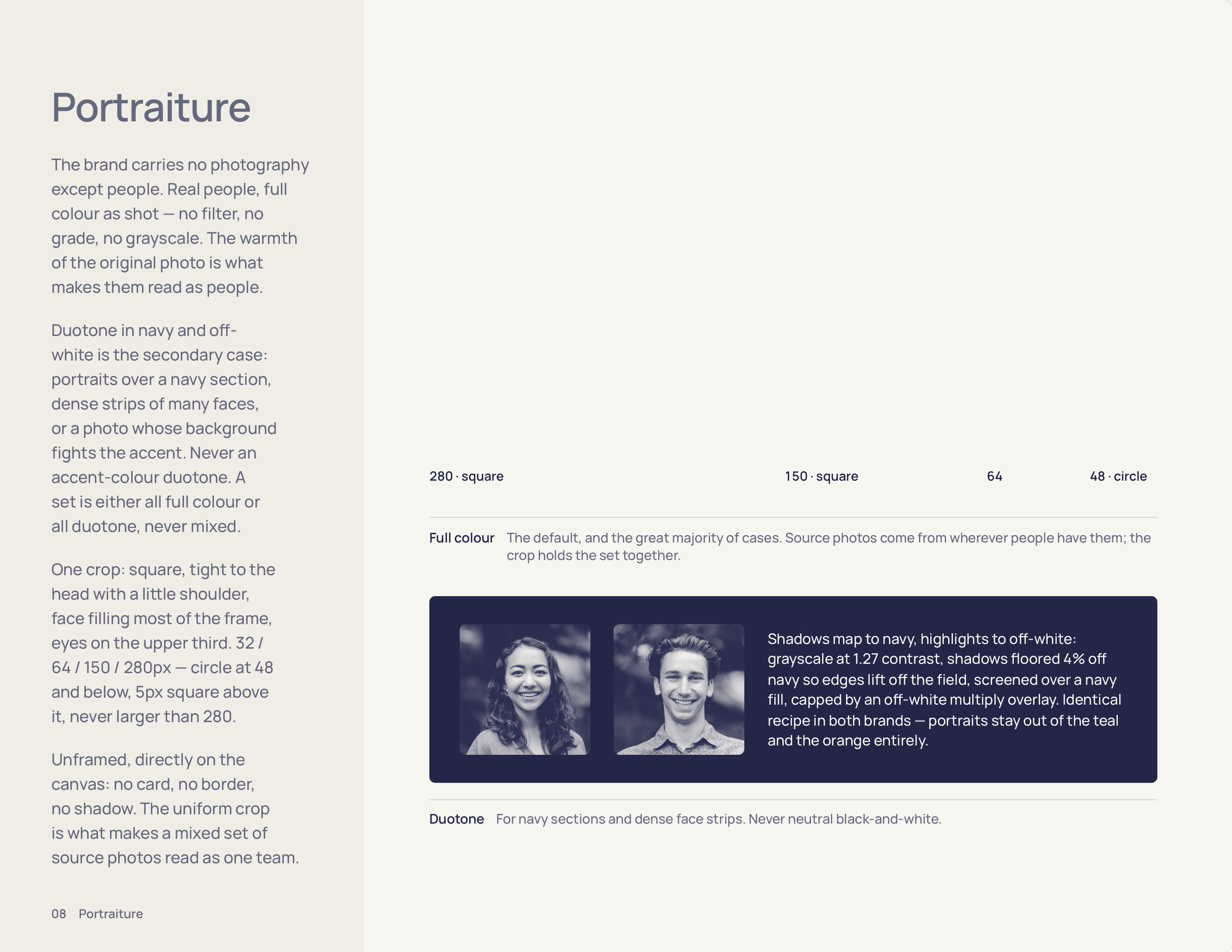
Branding guidelines PDF outputted from our final Claude design system
Drugs are designed against data that misses the disease.
Machine learning is transforming how drugs are designed. Yet, nine out of ten drugs that enter human trials still fail. They are designed against aggregated patient data that captures static moments and largely misses the essential moments where human biology actually changes.
Hospitals collect data at random visits.
Chronic diseases like lupus move in flares. A flare is a discrete, datable event — and it is almost never the day of a scheduled appointment.
Hospitals only sample on scheduled visits.
We sample the moment biology changes
1 Sun et al., 2022 · 2 Derived from ~$300B annual pharma R&D
We believe every drug will one day be tested in a virtual patient before it is tested in a person.
Those models will need data no hospital record or biobank holds today. We are gathering it.

Multiomics became a catalog service
Per-timepoint costs roughly halved since 2024.
Health records became portable
FHIR mandates let patients bring their own history.
Conversational AI got clinical-grade
Thousands of daily patient relationships at near-zero marginal cost.
New therapies need deep profiling
Advanced therapies demand longitudinal molecular profiling.
Two cohorts, one engine.
We watch each patient closer than anyone — the engine funds itself.
Watch
Continuous clinical contact via Gather.
Know
Live eligibility for every patient, today.
Enroll
Sponsors pay for successfully enrolled patients.
Fund
Revenue funds the event draws.
The screening population
EHR via FHIR, validated PROs, wearables, and an agent that initiates contact. No app to download — Gather reaches out first, morning and evening, over WhatsApp and SMS.
Sampled at disease events
PRE / FLARE / POST. Mobile phlebotomy at home within 24–48 hours of a flare, then sequence or bank. Our ML decides which samples run next, so spend follows signal.

The dataset every virtual patient will be built on.
Select a layer for detail.
One patient, every layer, every event: a dataset that has never existed.


Trials cannot find patients.
Immunology recruits at the highest cost in medicine, from information that is weeks to months stale.
of trials reach planned enrollment3
of trials run behind schedule3
lupus patients enrolled per site per month4
what a lupus trial spends per patient, all-in
3 Enrollment-barriers review, 2020 — 31% is a shortfall, not a success rate · 4 Md Yusof et al., BILAG-BR, Rheumatology 2021
A live platform in one quarter.
Live in patients today: 100+ patients waitlisted, 5+ pharma waitlisted, first paid pilots Q4 2026.

Partnership and investment enquiries.
Tell us the indication and the protocol window you are trying to fill. We will tell you who qualifies today — and what the event-resolved record can show you.